
Simulated replay. This post describes a season played out with sports simulation software. Scores, standings and winners are the simulation's results, not the real historical record.
With a third straight win in the World Series, the National League owners and teams are full of confidence heading into this offseason. Before everyone departs for their winter residences, the best players in both the American and National Leagues came together to see who would win the individual awards for the 1906 season.American League Batting Leaders:
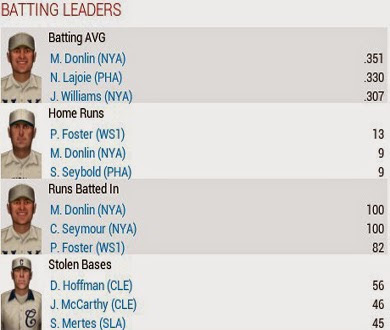
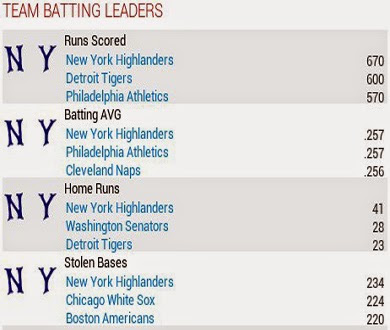
As has been the case for the past few seasons, the New York Highlanders again dominated the American League at the plate. Mike Donlin led the AL in batting average and finished tied with teammate Cy Seymour for the RBI crown, as both reached an even 100. If not for an outstanding power season from Washington left fielder Pop Foster, it was entirely possible that the Highlanders would have at least been able to celebrate a triple crown winner this season. Had New York's pitching been up to the level that it was in 1905, it may have very well been the Highlanders celebrating a World Series title.
American League Pitching Leaders:
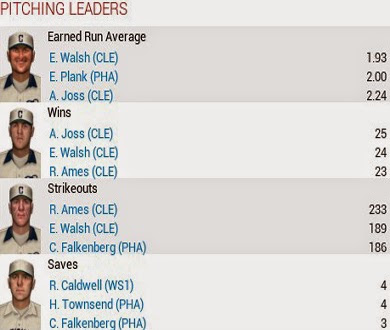
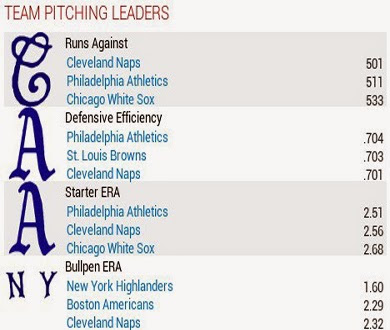
From an individual stand point, no other American League team could match what the Cleveland Naps were able to do on the mound in 1906. Cleveland's three headed monster of Addie Joss, Ed Walsh and Red Ames ruled over the American League, and though the Philadelphia Athletics only allowed ten more runs on the season than the Naps, Cleveland's overall performance made their pitching staff stand out more than Philadelphia's. While some Philadelphia supporters would argue that the A's had a better group of pitchers, you can not argue with how good Cleveland's "Big Three" are on the mound. Though the Naps came up just short in the World Series this season, if Joss, Walsh and Ames can stay healthy, the sky is the limit for the once sad sack Cleveland Naps.
National League Batting Leaders:
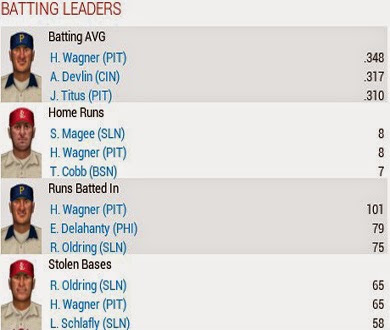
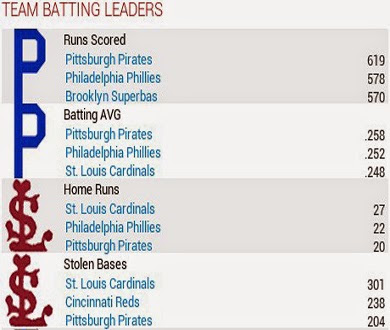
Though the St. Louis Cardinals knocked the Pittsburgh Pirates off their throne at the top of the National League, Pittsburgh still had one of the best offenses in baseball during the 1906 season. The Pirates were led by veteran Honus Wagner, who led the National League in batting average and runs batted in, and finished tied with Sherry Magee of the Cardinals for the National League home run crown. Wagner's outstanding season pushed the Pirates to the top of the charts in terms of offensive output in the NL, but unlike Wagner, many of his teammates were unable to keep up with his performance. To add insult to injury, St. Louis fans are claiming that, because Wagner finished tied with Magee for the home run title, he did not outright win the National League triple crown. Of course, no one in Pittsburgh is saying that, but Cardinals fans can't resist throwing yet another jab at their biggest National League rival.
National League Pitching Leaders:
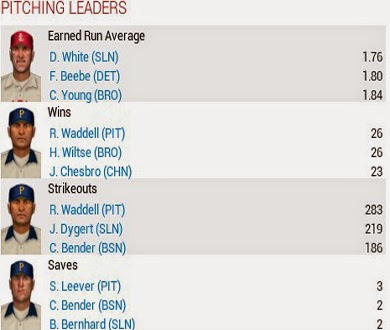
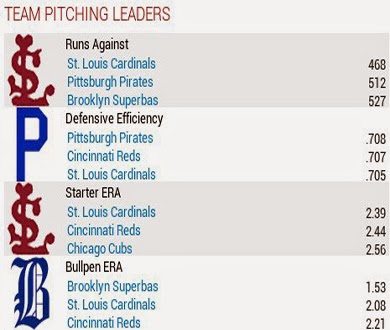
When people look back at the 1906 baseball season, they are going to wonder how the St. Louis Cardinals managed to surpass the Pirates. The answer is quite simple, however. While the Pirates boasted Rube Waddell, the best pitcher in baseball, the Cardinals had the better overall pitching staff, allowing just 468 runs for the entire season, which is nothing short of outstanding. From an individual perspective, Waddell once again had a terrific year, as he paced the National League in wins and strikeouts once again. In almost any other season, Pittsburgh's performance on the pitching mound would have garnered them top marks in the National League, but this season, Doc White, Jimmy Dygert and Bill Bernhard combined to prove that sometimes, even having the best pitcher in baseball on your staff isn't enough to beat a great team.
End of the Year Awards
American League Rookie of the Year: Whitey Alperman, SS-Cleveland Naps
Cleveland's outstanding 1906 season rested largely with its pitching staff, but the offense also had a few success stories. One of them was Whitey Alperman, who was a relative unknown coming into the season. As a third round draft pick, little was expected from the 26 year old rookie, but he delivered a season beyond anyone's expectations in 1906. The young shortstop batted .273 on the season with two home runs, 56 runs scored and 64 runs batted in.
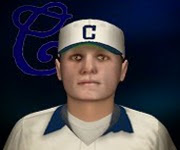
Whitey Alperman, the surprise winner of the American League Rookie of the Year Award.
National League Rookie of the Year: Jimmy Dygert, SP-St. Louis Cardinals
The St. Louis pitching staff had a historic season in 1906, and it wouldn't have been possible without the efforts of their fine rookie, Jimmy Dygert. The outstanding pitcher took to the pitcher's mound in his first season in the majors like a fish to water, winning 22 games while striking out 219 batters and posting a 2.24 ERA in 334 innings of work. At only 22 years of age, the future is very, very bright for this St. Louis ace,
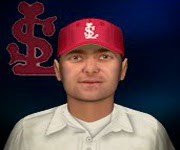
Jimmy Dygert's excellent 1906 regular season earned him the Rookie of the Year Award, and helped guide the Cardinals to their first World Series title.
American League Pitcher of the Year: Ed Walsh-Cleveland Naps
No one knew which member of the Cleveland Naps was going to be named Pitcher of the Year for the 1906 season, but everyone knew that the award was going to end up in the arms of someone on that team. When the votes were read, Ed Walsh came out on top, and his win was well deserved. Walsh finished the 1906 regular season with a career high 24 wins and a 1.93 ERA to go along with 189 strikeouts. Though any of the three Cleveland aces could have taken this award home, in the end, Walsh seemed to be most deserving of the honor, and he gladly accepted it.
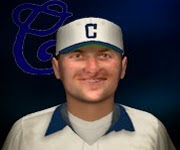
Ed Walsh's great season earned him the 1906 American League Pitcher of the Year Award.
National League Pitcher of the Year: Rube Waddell-Pittsburgh Pirates
While one could make an argument for any of the three St. Louis Cardinals pitchers here, the truth remains that Rube Waddell is still the best pitcher in baseball, and Pitcher of the Year remains an individual award. Though he could not get the Pirates back to the World Series in 1906, Waddell finished the regular season with a league leading 26 wins, 283 strikeouts and an ERA of 1.88. Waddell's 26 wins gives him six straight seasons with at least 25 wins, and at just 30 years of age, Pittsburgh's anchor on the mound is showing no signs of slowing down.
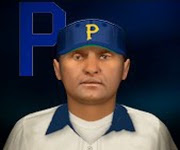
Rube Waddell, the now six time National League Pitcher of the Year Award winner.
American League Most Valuable Player: Mike Donlin, RF-New York Highlanders
The New York Highlanders still have one of the best offenses in all of baseball, and a large part of their success has to do with Mike Donlin. For the fourth time, Donlin's outstanding regular season has resulted in him taking home the award for Most Valuable Player in the American League. This year, Donlin paced the American League in both batting average, with a .351 mark and runs batted in, as he and teammate Cy Seymour each finished with 100. His nine home runs were second to Washington's Pop Foster, and while Donlin was unable to help get the Highlanders back to the World Series, another individual honor is never a bad thing to achieve.

Mike Donlin, the leader at the plate for the New York Highlanders and the 1906 American League Most Valuable Player.
National League Most Valuable Player: Honus Wagner, SS-Pittsburgh Pirates
For the first time since the World Series began, the Pittsburgh Pirates were unable to represent the National League, but no one is blaming Honus Wagner for that. The 32 year old shortstop has played for the Pirates his entire career, and he has never had a better season than the one that he just finished. Wagner led the National League with a .348 batting average and also drove in 101 runs to lead all of baseball. His eight home runs tied him with Sherry Magee of St. Louis for the National League lead, and that tie was the only thing keeping him from claiming the triple crown this season. Even without that esteemed accomplishment, Wagner's 1906 campaign was excellent, and the Pirates will be ready to compete again in 1907.

The Pirates were unable to win the National League pennant, but Honus Wagner's season was more than enough to earn him the Most Valuable Player Award in the NL.